Most buyers walk into a conversation about polyester already knowing what they think it means. Cheap. Synthetic. The fallback fabric you pick when cotton is too expensive. That assumption is wrong often enough that it is worth correcting before it costs you the wrong garment.
At Apex, we manufacture in both cotton blends and 100% polyester every week, and the buyers who understand the difference get a better result than the ones who assume higher cotton content always wins. Polyester is not a downgrade. In the right application, it is the better fabric, full stop.
Where polyester actually wins
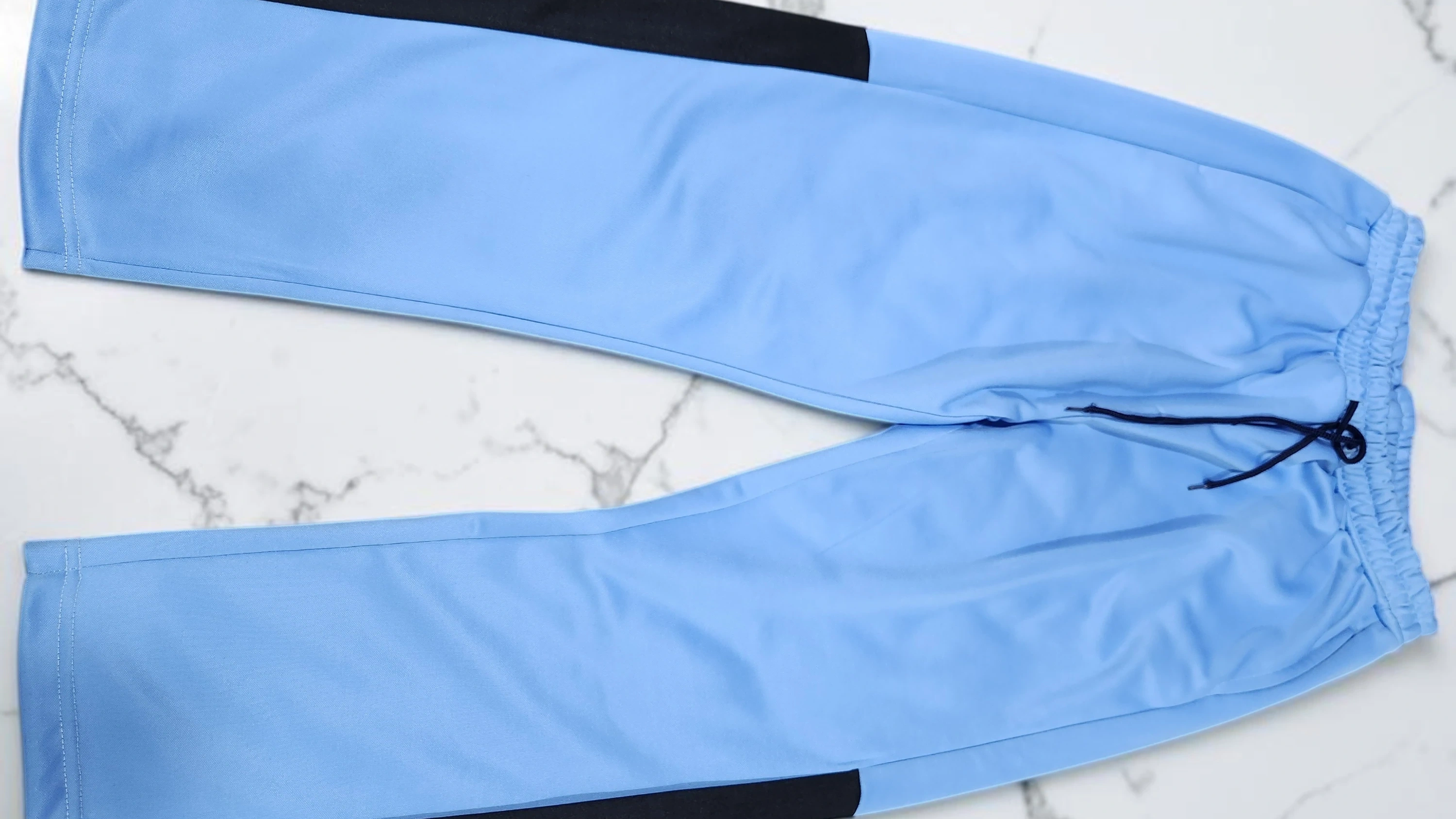
Polyester gives a garment three things cotton structurally cannot: strength, shine, and shape retention. A polyester knit holds its form after wear in a way cotton does not, because the fiber itself does not stretch and sag the same way. That structure is why we recommend 100% polyester for our trouser manufacturing line, where holding shape through a full day of wear matters more than it does in a t-shirt.
There is also a dyeing advantage most buyers never think to ask about. Polyester is dyed using a disperse dyeing process, where dye particles penetrate the fiber under heat and become locked inside its structure as it cools. That is what gives polyester such a low risk of color bleeding or leaking during wash, even after repeated washes. Cotton does not have that same built-in advantage. Depending on the dye class and fixing process, a cotton garment can bleed color into other fabrics in the wash, especially with darker or saturated shades. If a buyer's product will end up washed alongside light-colored items, or is being sold into a market where the customer will notice bleeding immediately, that is not a small detail. That is a returns problem waiting to happen.
Then there is the performance angle, and this one is only getting bigger. Moisture-wicking, quick-dry, four-way stretch, all of it depends on synthetic fiber behavior that cotton simply does not have. As more brands move into performance and athleisure categories, and as more consumers care about how a garment performs rather than just how it looks on a hanger, demand for well-made polyester is climbing, not shrinking.
The myth that costs buyers money
Here is where it gets interesting. The same instinct that makes buyers assume more cotton equals more premium makes them assume the opposite about polyester, that it must be cheap, because it is synthetic. Neither assumption holds up.
Cotton and polyester are not on the same scale. They are not a spectrum where one end is premium and the other is budget. They are two different tools built for different jobs, and each does something the other cannot. A well-constructed 100% polyester garment, made with the right yarn and knitting method, can outperform a poorly specified cotton garment in every way that matters to the end buyer, and it can cost more to produce, not less, depending on the polyester grade used.
It is also worth saying plainly that polyester is not the only man-made fiber in the conversation. Nylon, rayon, and acrylic all show up in performance and specialty fabrics for their own reasons, each with different strength, stretch, and hand-feel properties. That is a deeper topic on its own. For this post, the point that matters is narrower: do not let synthetic become shorthand for lesser. It is not.
What actually determines quality in polyester
If ratio is the variable buyers fixate on with cotton blends, as we covered in our piece on PC blend ratios, polyester has a different set of variables that matter more, and most buyers do not know to ask about them.
It is not primarily about yarn count the way it is with cotton. With polyester, quality comes down to which type of polyester is being used and how it is knitted. Filament polyester behaves differently from spun polyester. A tight interlock knit produces a different hand-feel and shine than a looser jersey construction, even using the identical yarn. Two garments can both say 100% polyester on the label and be genuinely different products, because the label does not capture the variable that actually matters.
This is where an experienced manufacturer earns their keep. We choose the polyester type and knitting method based on what the garment needs to do, not just what hits a price point.
Where polyester is more forgiving than cotton
There is one place polyester genuinely makes life easier: consistency between sample and bulk. As we discussed in our piece on sample-to-bulk drift, cotton and cotton blends can shift in feel and weight between a pre-production sample and a bulk run, even when everything is done correctly. Polyester does not have that problem in the same way. It is a more stable fiber, and in our experience, the drift buyers worry about with cotton blends rarely shows up when the fabric is 100% polyester. If sample-to-bulk consistency is a priority for your production, that is a real point in polyester's favor, not a minor one.
The question that separates buyers who know what they are doing
If you are specifying a 100% polyester order, the question worth asking your manufacturer is not is this good polyester. It is this:
Which type of polyester and knitting method are you using for this GSM, and how will that affect the shine and drape?
That question tells a manufacturer you understand the fabric does not live or die on the fiber content label. It lives or dies on the choices made underneath it, choices most spec sheets never mention.
Apex Corporation